Social determinants of health play a vital role in shaping health outcomes and addressing health disparities in Senegal, says new report
Senegal currently lacks robust mechanisms for monitoring social determinants of health (SDoH) – but the number of international tools and frameworks that could support future efforts is growing.
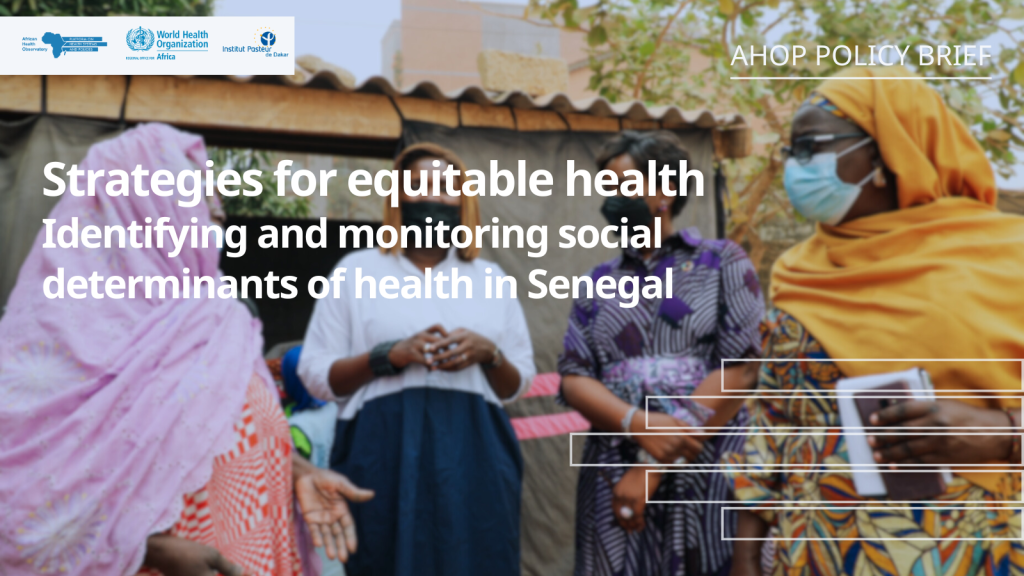
This policy brief, published by the African Health Observatory – Platform on Health Systems and Policies (AHOP) and our Senegal National Centre partners at Institut Pasteur de Dakar, stresses the need to understand and manage SDoH in order to improve the health of the Senegalese population and ensure equitable access to quality health services.
According to the brief, available data in Senegal suggest that social determinants such as education, income level and geographical location (urban versus rural) are strongly associated with key health outcomes, particularly with regard to maternal and child health. However, monitoring systems remain fragmented and lack the comprehensiveness required to fully assess SDoH status and trends across populations. Further investment in multisectoral data collection and integration is required to capture the full extent of inequities.
This brief proposes a list of SDoH indicators relevant to Senegal, along with the monitoring methods for each indicator. To operationalize this list, community engagement is necessary to ensure that community experiences shape the final list of selected indicators. Monitoring of the selected SDoH indicators could be integrated into the broader Sustainable Development Goals (SDGs) monitoring, in line with World Health Organization (WHO) recommendations. The evidence gathered through this monitoring could then inform policies to guide the adaptation of the health system to improve SDoH management and health outcomes.
Tackling SDoH is both a moral imperative and a practical strategy for building a healthier, more equitable Senegal. By moving beyond sectoral silos and prioritizing inclusive, data-driven policies, Senegal can accelerate progress towards UHC, socioeconomic development and national resilience.
AHOP is a regional partnership that promotes evidence-informed policy-making. It is hosted by the WHO Regional Office for Africa (WHO AFRO) and is a network of centres of excellence from across the region, leveraging existing national and regional collaborations.
The extended summary is now available for download in English and French. The entire policy brief will be published online soon.